Star-K Logo
Star-K Online
Español Chinese Português
Kosher Consumer Getting Certified Asia Pacific
Alerts New Seasonal Products/LOC's Traveling Kosher Kosher Baltimore Appliance/Kitchen
Latest Star-K Lists Keeping Kosher Kashrus Kurrents Articles About Us Faq's Links Passover

January 19, 2012

Reflections on Kosher Cruises
by Margie Pensak

STAR-K Certification's heartfelt condolences extend to those who have lost loved ones in the recent horrific tragedy of the capsized cruise ship, Costa Concordia. Rescue operations continue to search for those who remain unaccounted for among the 4200 passengers onboard the liner when it hit the rocks off the tiny Tuscan island of Giglio, Italy.


"A tragedy like this brings home the issue that travel at sea has its dangers," says STAR-K Kashrus Administrator Rabbi Zvi Goldberg. "The Rabbis instituted the brocho of "hagomel" after disembarking from a voyage. Although, statistically, travel by ocean liner may be safer than travel by car, one still must recite that blessing of thanksgiving nowadays.

"There are many halachos one must consider before deciding to embark on a cruise," adds Rabbi Goldberg. "Kashrus, tznius, Shabbos, and davening bring their own unique challenges onboard. Making sure that one is keeping those mitzvos properly would surely be a zechus (merit) to ensure one's safety."

Although, presently, STAR-K does not kosher certify any cruises, it would like to present just some of the several questions that Torah observant cruise passengers must face:

KASHRUS: What arrangements have been made to accommodate kosher food preparation? Is a kitchen dedicated to kosher food preparation, or has only a portion of a non-kosher kitchen been designated for kosher cooking? Will there only be a small percentage of the passengers who are kosher, making an especially problematic shared kosher and non-kosher situation more likely? Are you confident that everything will be cooked before Shabbos, and that the mashgichim will ensure that the staff follows the intricacies of the Shabbos laws of food preparation?

TZNIUS: Is it likely that your fellow passengers will show a lack of modesty, particularly if you are sailing to a sunny destination?

SHABBOS: Does the cruise leave within three days of Shabbos or Yom Tov, which Chazal have decreed is forbidden if the ship does not dock before Shabbos and remains in port during that Shabbos?

KABOLAS SHABBOS: How will you know when to accept Shabbos since, for security reasons, cruise lines are reluctant to release data to passengers and it is difficult to know exactly where the ship will be at any given moment?

ELECTRONICS: Will electronic cabin door locks, electric eye automatic door opening mechanisms, and sinks and toilets controlled by an electric eye, that have become commonplace on cruise ships, create a challenge on Shabbos?

SECURITY: If you return to the ship after a Shabbos stroll, can you be guaranteed that you will not set off alarms or lights at the metal detector? How will you get around showing your ticket (which may be muktza and forbidden to carry) and/or passport upon returning to the ship, so as not to cause Shabbos violations?

Answers to these questions and more can be found in Kashrus Kurrents ("Don't Miss the Boat: Halachic Guidelines of Kosher Cruises"), or by visiting STAR-K Online,
www.star-k.org, [http://www.star-k.org/kashrus/kk-trav-cruise.htm].

September 20, 2011

High Tech and Halacha Meet at STAR-K's
First-Ever Interactive Eruv-inar

by Margie Pensak

eruv picture

On Wednesday, September 7, at 8 p.m. EST, STAR-K made history by hosting the world's first Eruv-inar. The inaugural long distance interactive presentation allowed participants from around the globe to experience a live workshop highlighting eruv shaylos through the use of pictures of eruvim, which were submitted. STAR-K's Rabbinic Administrator, Rabbi Moshe Heinemann, shlit"a, has always been on the cutting edge of the juxtaposition of advanced technology and halacha; the Eruv-inar featured Rav Heinemann discussing hilchos eruv.

The Eruv-inar enabled seventy-five eruv checkers and rabbonim hamachshirim from Providence, Rhode Island to Mercer Island, Washington, and from Alpharetta, Georgia to Ottawa, Canada, to review Hilchos eruv and pose their eruv shaylos, gratis, with no strings attached!

Rabbi Yitzchok Feldman, the Rav of Congregation Emek Beracha, in Palo Alto, California, planned his community's eruv, led the political battle which got it approved, and oversaw its installation. Rabbi Feldman also helps check it and often fixes it when it is broken. Rav Heinemann helped with the planning of the Palo Alto eruv, but its ultimate Rav HaMachshir is R' Elchonan Tauber of Los Angeles.

"STAR-K's Eruv-inar was a good use of the medium to convey pertinent Halachic information," feels Rabbi Feldman, who participated in the Eruv-inar. "The pictures made it very hands-on. One of the special things about Rav Heinemann is that he is so deft at applying the constructs of Halacha to real life situations. This gave so many the chance to see this in real time.

" Rabbi Eliezer Eidlitz is the Rav Hamachshir of the San Fernando Valley Eruv, servicing over 100,000 Yidden. A few months ago, his community flew in Rav Heinemann to go over a few issues and in general to look again at it. "I had all of our eruv checkers and myself watch the Eruv-inar," says Rabbi Eidlitz. "It was very detailed and clear. It also provided a great source for discussion of many of the Halachos that we encounter here with fences, Tzuras Hapesach and sound walls along the many freeways that we use. Everyone who participated is eagerly waiting for more. Yaasher Koach!"

Just one of Rabbi Eidlitz's San Fernando Valley Eruv checkers, who participated in the Eruv-inar, is Yitzchak Feiglin, an avreich learning in Kollel in Yerushalayim. Although he is not actively involved in any Eruv work at the moment on a regular basis, he was heavily involved with the Valley Eruv, responsible for checking, repairing, overseeing repairs and 'upgrades' recommended by Rav Heinemann after he inspected it. When the Feiglins return to Los Angeles for a visit, Mr. Feiglin still helps out with the Eruv when he can.

"I found the Eruv-inar very informative, and gained much practical knowledge from the shailos that Rav Heinemann, shlit"a discussed," says Mr. Feiglin. "It made me aware of concepts and issues that I had not previously seen- - in fact, the Valley Eruv I had been involved in seemed incredibly simple compared to some of the intricate shailos that were answered during the session. The only drawback for me was that I had to get up at 3 a.m. Israel time to participate in the Shiur! Regardless of that, I would be eager to participate in future sessions on Eruvin and other topics in which the Rav, shlit"a, would be willing to hold shiurim."

The Eruv-inar was just one in a series of Webinars that STAR-K has been presenting monthly since 2006, on a wide-range of topics such as: Buying Kosher Foods at Non-Kosher Stores, Schach Mats, Kosher travel, Pesach, Women in the Kosher kitchen, Raisins, Vegetable Checking, Liquor, Shechita, Fish Worms, Laws of Kiddush, Laws of Shaimos, Candy, Coffee, Shmittah, Pruzbal, Sabbath Mode appliances, as well as a wide range of discussions of the latest Kosher issues. Currently, our library has 50 webinars; replays and signup info are available at www.kosherclasses.org.

"Star-K has always invested a tremendous amount of its energy and resources into education, both in Kashrus and other Torah areas," says STAR-K Kashrus Administrator and educational program director, Rabbi Zvi Goldberg. "This series of eruv-inars is yet another area where we can benefit the Torah community, using modern technology to our advantage. We were able to show the wires and fences up close and delineate exactly where the problem was, almost as if the participants were on a tour of actual eruvin with Rav Heinemann. We plan to continue this series and expand to other areas, such as questions that arise during mikvah construction and maintenance. On a personal level, it is a great zechus and pleasure for me to work directly with Rav Heinemann, whose breadth of halachic knowledge on these and other topics is well-known."

To be alerted to STAR-K webinars, see a replay of the eruvi-nar when it is posted, or receive other STAR-K information, sign up for STAR-K alerts at www.star-k.com.

August 23, 2011

STAR-K Experts Speak to Latin Americans and Baltimoreans in Summer Educational Programs
by Margie Pensak

Twenty-five years ago, Rabbi Moshe Fuller, z"l, a young Mexican student at Ner Israel Rabbinical College in Baltimore, filled a tremendous void in the world of Jewish outreach when he founded Or HaNer. Recruiting teenagers primarily from Central and South America, Rabbi Fuller provided them with the opportunity to come to the States and experience Torah-true Judaism during their summer and winter school breaks. Although the young husband and father passed away a few years ago, his dream lives on through the thousands of students he influenced, many of whom subsequently attended yeshivas. Today, there are yeshivas and learning programs throughout Latin America, and a kollel (institute of advanced Jewish studies) in Panama, thanks to Rabbi Fuller's impact.

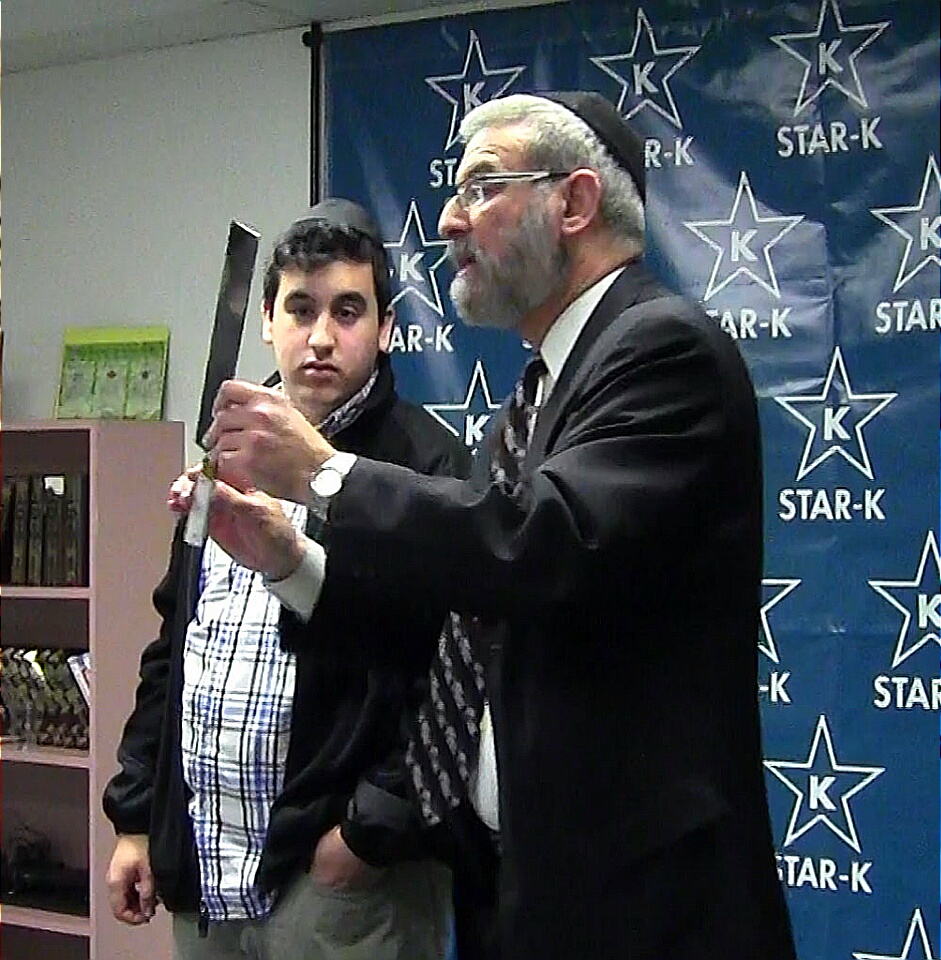
This was the third summer that STAR-K Kashrus Administrator, Rabbi Boruch Beyer, was asked to be a guest speaker at Camp Or HaNer boys' campus on the grounds of Ner Israel Rabbinical College. The twenty or so high school aged campers hailed from Mexico, Costa Rica and Chile. Rabbi Beyer, an expert in industrial kashrus and an experienced high school instructor, gave an interactive hour and a half session on kosher basics and the challenges of keeping kosher, using a Spanish power point presentation prepared by STAR-K to augment his presentation.

"For many of the children this is the first time they can understand and appreciate all the work that goes into ensuring there is kosher food for them to eat," says Rabbi Moshe Matz, director of Camp Or HaNer. "They really enjoy and grow from the Star-K presentation."

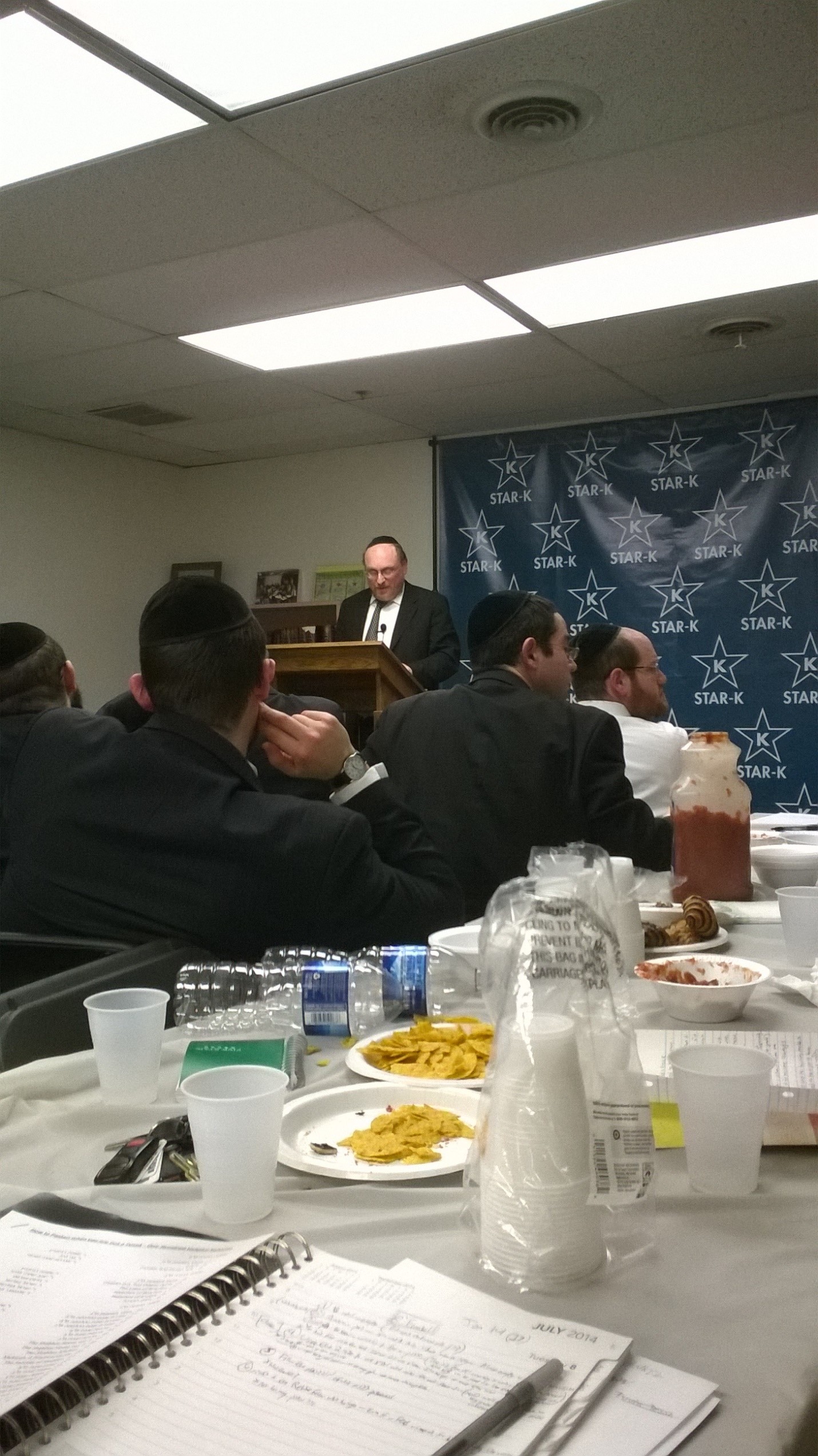
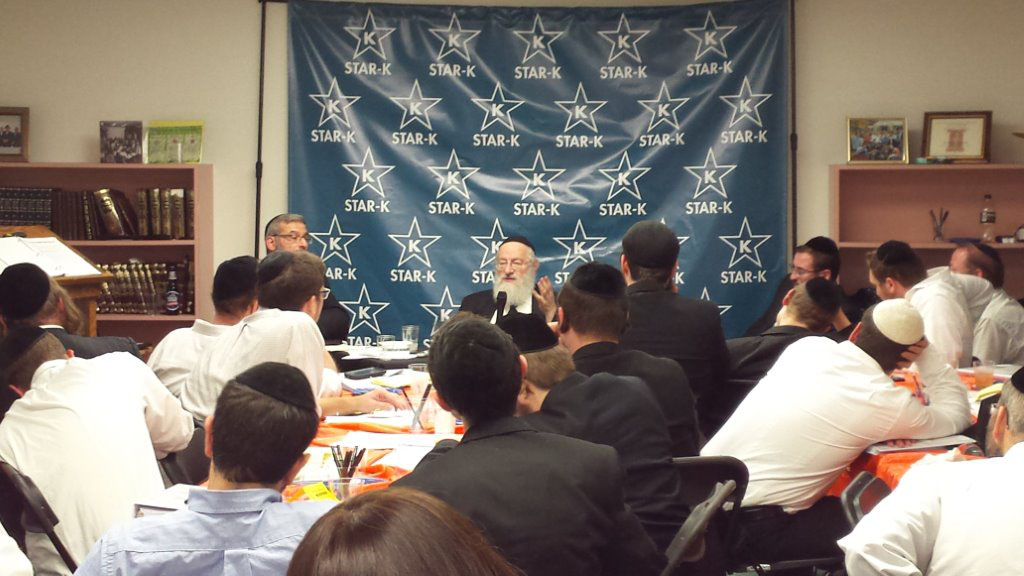
Earlier this month, STAR-K Certification Kashrus Administrator, Rabbi Zvi Goldberg, was asked to give a shiur at Congregation Shomrei Emunah in Baltimore, Maryland, to the Blatt-a-Week learning program. About to complete the second perek of Avoda Zara, the shiur had been dealing with the sections of stam yainam, pas akum, chalav akum, bishul akum and simanim in dagim. Elly Lasson, a member of the program, approached Rabbi Goldberg about having a shiur to discuss some of the contemporary issues that emerge from the gemara. To benefit the most people possible, the shiur was opened to the entire Shomrei Emunah congregation. Rabbi Goldberg shared some guidelines of STAR-K's policies of practical contemporary halachos of fish and bishul akum. Among issues discussed was STAR-K's policy of insistence that the Mashgiach positively identify each and every fish by viewing its scales, as per the ruling of Rav Moshe Feinstein, z"l. The challenges of shopping in a store that uses the same knives to cut kosher and non-kosher were discussed, as well. The shiur was well-received and Rabbi Binyamin Marwick, rav of Congregation Shomrei Emunah, wrote a note of appreciation to Rabbi Goldberg, saying: "I heard very good feedback from those that attended. Everyone enjoyed and learned a lot. Thank you for taking the time to come-and I hope we can do this again sometime!"

May 2011

STAR-K To Host Eruv-inar This September
by Margie Pensak

If you are an eruv checker or rav hamachshir in one of the dozens of cities across the United States, Israel, Europe and Australia that has an eruv, you can now review hilchos eruv and pose your eruv shaylos, gratis, with no strings attached!

On Wednesday, September 7, at 8 pm EST, STAR-K will host the world's first Eruv-inar, featuring Rabbi Moshe Heinemann, shlita, who will discuss hilchos eruv. This inaugural long distance interactive presentation will allow participants to experience a live workshop highlighting eruv shaylos through the use of pictures of eruvim that have been submitted to STAR-K.

Pre-registration is required to participate in this program. Please forward your name, the capacity in which you serve your eruv, and the location of the eruv to eruv@star-k.org. If you have a shayla regarding your eruv, please forward pictures of it (along with a note detailing the question) to the same address. There is a 10 megabyte limit for attachments, so you may have to break up the pictures into several emails.

For further details about the Eruv-inar, please contact Rabbi Zvi Goldberg, 410-484-4110, ext. 219.

December 2010

STAR-K on Campus: For Some, a First Taste of Judaism
by Margie Pensak

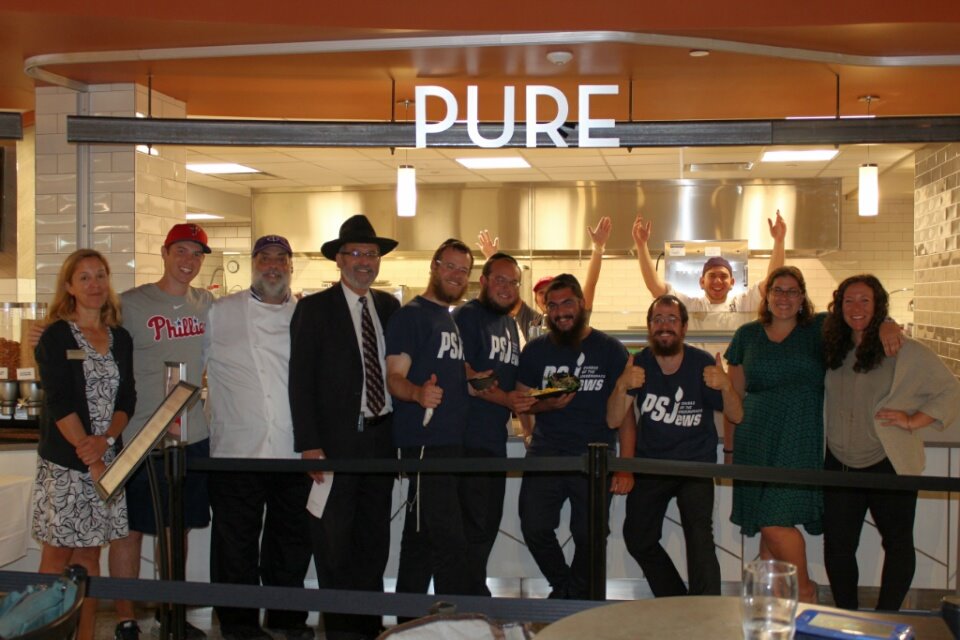
For those of you who think that all colleges are "treif", STAR-K Certification knows that is not the case. STAR-K certifies eight kosher restaurants, take-outs, and concession stands on seven college campuses on the northeast coast.

The increasing number of kosher amenities on American college campuses seems to be a trend, with liberal arts colleges seeking opportunities to attract Jewish students. Kosher kitchens, and other investments of Jewish life on campus, act as magnets to attract the estimated 90% of Jewish students who attend college. For some of them, STAR-K Certification's presence on campus may be offering a very first taste of Judaism, literally and figuratively.

Rabbi Ephraim (Efy) Flamm, the director of the Jewish Collegiate Network, an affiliate of The Etz Chaim Center, an adult outreach organization in Baltimore, says that there is no question that Kosher has grown on the Maryland college campuses over the years. "I work with unaffiliated and very marginally involved students, meeting them on their turf," says Rabbi Flamm, who co-founded the organization over 20 years ago with his wife, Penina, and the backing of Mrs. Hannah Storch. "The Kosher program has grown and has helped build Jewish life on campus. It is not unusual for non-observant friends of those who are kosher observant to mingle in the dining area. I have had students who became kosher and observant because of this. The Kosher program builds a certain nucleus of students that grows, and it expands rapidly."

Rabbi Mayer Kurcfeld, the kashrus administrator who has both engineered and overseen STAR-K's certified kosher operations on campus, since the first kosher kitchen opened on the Goucher College campus in 1999, clarifies the concept of Kosher on campus today.

"Initially, these Hillel-run Kosher programs were a separate entity," explains Rabbi Kurcfeld. "The college's kosher kitchen was located in a separate facility that was frequented by Jews, alone. The reality of the situation today is that kids are traditionally kosher, but they want to eat with their non-kosher friends, as well. At all of the newer college kosher facilities, you can sit with anybody and the kosher food is available to Jew and non-Jew alike. The model has changed to make kosher accessible to everyone, and it now has a food court type of look, similar to the one you see at shopping malls. You go into one common area to sit; food is served on disposables with disposable paper placemats. We have a mashgiach temidi (supervising Rabbi who is on the premises at all times of production and operation) in the prepping and serving areas, and it is STAR-K's policy to prepare only glatt kosher and cholov Yisroel foods. Individual pre-packaged foods can be non-cholov Yisroel, under reliable national certifications, eaten at the discretion of the student."

Avigail Summers is a Torah observant freshman who attends Goucher College in Towson, Maryland, a suburb of Baltimore. Sending her daughter 1500 miles away from their Denver home was made a bit easier for Avigail's mother, Devorah, knowing that the college of her choice had a reliable kosher food plan.

"When looking at colleges, it was a top priority to find a school that offered a meal plan with a reliable hashgacha (kosher certification)," says Mrs. Summers. "Finding any school that will offer a kosher meal plan can be daunting. Often, a school will have a Hillel affiliation, but not necessarily a kosher kitchen or access to a meal plan. Knowing that Goucher is under the Star-K is very comforting.

"Avigail has made many new friends and has come to learn that although they are not affiliated, they are Jewish," Mrs. Summers continues. "Even though these kids have not signed up for the kosher meal plan, they too are allowed to eat at Hillel from the kosher kitchen once a week. Many of these students, even though they are not religious or observant, come to Hillel for Friday night Shabbat dinner. They comment on how good the food is, how comfortable the environment is, and that Hillel provides more of a dining room like they have at home instead of a cafeteria style room. They really appreciate the home style touches. In some respects, Goucher and Hillel, whether intending to or not, have provided a type of kiruv (outreach) by allowing all of the Goucher students to partake in the kosher meal plan. By no means does Hillel promote any agenda, they just welcome everyone. I feel this is beneficial to all and creates a greater sense of community."

How difficult is it to provide these students with the opportunity to keep kosher on campus? Rabbi Kurcfeld says that the challenge of setting up the new generation of kosher facilities on campus, such as those on the Franklin & Marshall, Dickinson and Muhlenberg campuses, simply entailed the mechanical details. "I made a presentation reviewing the basic rules and technical aspects of Kashrus to representatives of both the college food services and the food service industry," notes Rabbi Kurcfeld. "My challenge was to custom-tailor kosher facilities, from scratch, which worked easily within the framework of the respective schools. I mapped out exactly how the kitchens would be set up logistically for milk and meat, approving the blueprints before the construction began."

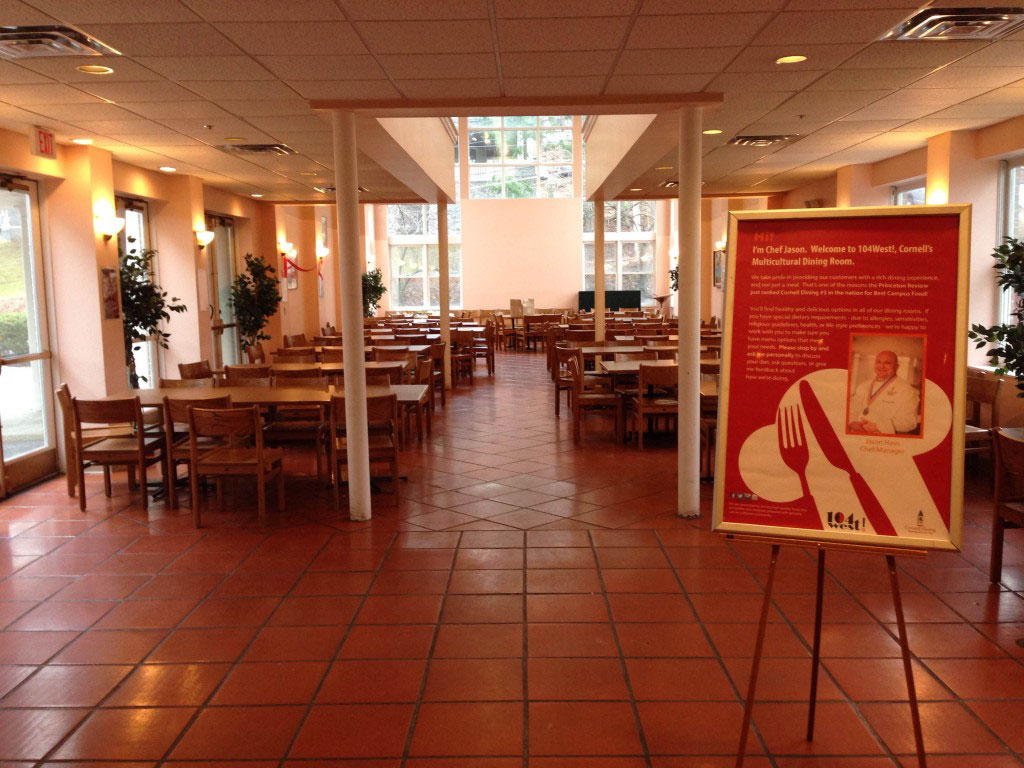
The STAR-K certified KOVE (an acronym for KOsher, VEgan) station in the Dickinson College dining hall in Carlisle, Pennsylvania serves its 10% Jewish student population and others such non-standard kosher fare as citrus London broil, coffee-rubbed brisket and falafel chicken. It is open for lunch and dinner, Sunday through Friday afternoon.

Keith Martin, the director of dining services at Dickinson's KOVE, says, "The KOVE has been very well received by Jewish and non-Jewish students alike. It is not uncommon to see long lines at The KOVE, and we expect interest to grow."

He chose to pursue kosher certification at Dickinson because, "Given Dickinson's strong Judaic-studies program, Hebrew language and study abroad offerings in Israel and extraordinarily active Hillel chapter, we thought a certified-kosher dining option would further enrich Jewish life at the college," explains Mr. Martin. "Our hope is that students will see this new addition as a sign of Dickinson's commitment to making the college an exciting place to explore Jewish heritage. The KOVE will give both Jewish students who keep kosher and all Dickinson students a delicious dining alternative.

"Dickinson has an excellent reputation for serving high-quality, delicious food in its student Dining Hall," he continues. "When the college made the commitment to offer a certified kosher dining option, it was important that the food and the service reflect that same quality. After researching the available options, we chose Star-K."

Interestingly enough, Muhlenberg College in Allentown, Pennsylvania, despite its Lutheran affilitation, boasts a 34% Jewish student population.. Responding to the needs of the kosher consumer and others with dietary restrictions, it recently opened The NOSHERY, featuring two separate kitchens: NOSHERY North and NOSHERY South. NOSHERY South offers meat meals and NOSHERY North offers pareve/dairy dishes to its student body. It plans to be open to the public at some point in the future.

John Pasquarello, the general manager of Muhlenberg College Dining Services, says that he pursued Kosher certification because, "We wanted to make sure our customers had food products and ingredients that meet all Kosher requirements. We chose STAR-K because of their commitment, expertise and resources to supervise Kashrus laws. Our relationship has been a true partnership. We couldn't be more happy with STAR-K."

A few years ago, Franklin & Marshall College, in Lancaster, Pennsylvania, opted to offer its more than 20% Jewish population healthier kosher options, at KIVO (an acronym for Kosher, International, Vegan/Vegetarian, Organic). Open seven days a week, it serves only dairy dishes for breakfast and a choice of dairy or meat dishes for lunch and dinner. The only kosher food operation in Lancaster is open to the public, as well, while college is in session for all-you-can-eat prices.

Rabbi Hayim Schwartz, the executive vice president of the Rabbinical Seminary of America (Yeshiva Chofetz Chaim), had the opportunity to eat at KIVO with his family during a recent visit to Lancaster. He was so impressed with the kosher dining hall, he wrote the following to John Burness, the president of Franklin & Marshall College:

"You are to be commended for offering an option such as KIVO for your Jewish and other students. Many colleges do not have kosher dining facilities, with full-time mashgiach supervision from such a reputable institute such as the STAR-K of Baltimore. While I am sure the KIVO operation must cost Franklin & Marshall College a pretty penny, this letter is confirmation that your people are doing a great job operating KIVO and represent your college in the best possible way. Kudos to you and to your entire Board of Trustees for having the foresight, wisdom and understanding to undertake an operation such as KIVO and to make it available to your students, and to the greater Jewish community."

Ronnie Berman and Mark Powers are KIVO's two mashgichim (kosher supervisors). "The response has been tremendous from students across the board," says Mr. Berman. "The athletes come in for our burgers and hot dogs because they are so good. We also cater to any students with special needs diets. On both sides, we maintain a gluten-free area, for those students with Celiac disease. We carry gluten-free wraps and "bread" and always try to have a gluten-free entrée."

"I think that we are doing a tremendous Kiddush Hashem by having kosher food available to non-observant students," continues Mr. Berman. "Also, Mark and I are available to answer questions from all the students. There is a large lack of knowledge of Kashrus amongst the non-Jewish world. Many people think that we have blessed the food to make it kosher. Unfortunately, we've found many Jews who think the same. When I can educate people about the beauty of keeping kosher, I especially find my work very rewarding and fulfilling."

Likewise, for STAR-K, the logistics of setting up a kosher kitchen on campus and overseeing its operation goes beyond the actual certification of the food, itself. As Rabbi Kurcfeld put it, "Not only do I get a tremendous amount of nachas when I see the students enjoying deliciously prepared kosher food, it gives me great satisfaction to know that these colleges have offered the students the opportunity to eat kosher - an opportunity they never had before."

STAR-K Certified College Programs
Johns Hopkins University, Baltimore, MD: Kosher Korner-Terrace Court Cafe Johns Hopkins University, Baltimore, MD: The Smokler Center for Jewish Life (Hillel), Baltimore, MD
Franklin & Marshall College, Lancaster, PA: KIVO-Ben Franklin Dining Hall Muhlenberg College, Allentown, PA: The Noshery North, The Noshery South
Dickinson College, Carlisle, PA: The KOVE University of Maryland-Baltimore County (UMBC), Catonsville, MD: Kosher Korner-Resident Dining Hall
Goucher College, Towson, MD: Hillel Student Center in Stimpson Hall Towson University, Towson, MD: Kosher Korner-Newell Building

July 2009

STAR-K Brings Kashrus to a Location Near (and Far From) You!
by Margie Pensak

When Rabbi Chaim Glazer, an eleventh grade rebbi at Yeshiva Toras Chaim, in North Miami Beach, Florida, was teaching his class about Kelai Elanos (the issur of grafting two trees of different species together), his lesson plan research led him to a STAR-K Kashrus Kurrents article on hydroponics--the cultivation of plants in a nutrient solution rather than in soil. Always seeking to give his students "beyond book learning experiences", Rabbi Glazer contacted the author of the article, STAR-K Kashrus Administrator, Rabbi Zvi Goldberg. Rabbi Goldberg suggested that he and the bochurim learn about the halachic implications of hydroponics, face-to-face--despite the fact that they were about 950 miles apart--using a video camera.

Rabbi Glazer's talmidim were able to watch Rabbi Goldberg speak about: the ramifications which hydroponics has on the brocho rishona of fruits and vegetables, the prohibitions regarding harvesting them on Shabbos and Yom Tov, the implications hydroponics has for trumos, maaseros and shmitta, and the use of hydroponic romaine lettuce as marror at the Pesach seder. The bochurim asked some excellent questions: What do you do if you go to the store and cannot figure out if the fruit or vegetable is hydroponic? Do hydroponic strawberries have insects? Is the Israeli exported greenhouse grown romaine lettuce, Alei Katif, grown hydroponically?

Rabbi Glazer used Rabbi Goldber's shiur, in conjunction with a high-tech hydroponic greenhouse tour, to reinforce his teaching lesson. "Today's bochurim sometimes find it hard to relate to concepts they've never experienced," notes Rabbi Glazer. "Rabbi Goldberg and the Star-K educational program enabled my students to experience real-life applications of what they are learning about in the classroom."

STAR-K's utilization of technology in educating others about kashrus is nothing new. STAR-K's InterAgency TeleKosher Conference series uses the telephone to enable local vaadim, rabbis and mashgichim, the world over, to speak directly to kashrus experts from various agencies, in a non-political forum, posing their most pressing kashrus questions that are distinctive to their communities.

Students living closer to STAR-K's Baltimore, Maryland offices, have the opportunity to learn about kashrus, in person, without the use of technology. STAR-K Kashrus Administrator, Rabbi Dovid Heber, recently spoke to a group of Lakewood Teachers Seminary students about the various production methods of breakfast cereals and their impact on Hilchos Brochos. Similarly, tenth graders from Reenas Bais Yaakov, in Highland Park, New Jersey, benefitted from a recent shiur which Rabbi Heber delivered exclusively for them--a behind-the-scenes look at what goes into the STAR-K kosher symbol, from a halachic, technical, and tracking perspective.

Why did Reenas Bais Yaakov teacher, Mrs. Chaya Eidelman, decide to visit STAR-K, with her tenth grade students? "I wanted to show the girls something that would encapsulate Jewish Baltimore. Of course, STAR-K is known far and wide for kashrus, and things beyond kashrus, also."

STAR-K's educational efforts also include the hosting of an intensive week-long annual Kashrus Training Seminar, each summer, for rabbonim, kollel fellows, and others serving as klei kodesh. It features lectures by STAR-K's rabbinic staff members, audio-visual presentations, a hands-on practicum, and several field trips.

STAR-K took a mini-version of its Kashrus Training Seminar on the road, to the yungerleit of Rabbi Avrohom Lefkowitz's Kollel Bnei Torah, Lakewood, New Jersey, in late December. Rabbinic Administrator, HaRav Moshe Heinemann, and STAR-K Kashrus Administrators addressed various topics, including: Kashering --Restaurants/Caterers/Factories, Guide to Hashgocho of Restaurants and Caterers (includes checking for tolaim), Cholov Yisroel, and The Kashrus of Bakeries.

These educational programs are just some of the many ways that STAR-K CERTIFICATION is committed, as a non-profit agency, to representing the kosher consumer in promoting kashrus through education, research and supervision. For further information regarding STAR-K programs, contact 410-484-4110. To join STAR-K's ongoing TeleKosher Conference Series, scheduled for the last Wednesday of each month at 12 noon EST, call: 605-475-8590 and enter conference 528-5502.

June 2009

STAR-K Leads Kosher Novice Tour for Johns Hopkins University Students

Jenna Fogel's grandparents keep kosher and she has eaten kosher foods, but she admits she never really understood the meaning behind them. "I always thought a rabbi said a prayer and put a kosher stamp on the box and then it was considered kosher," says Jenna, a Chemical Engineering major. Such kashrus misconceptions were clarified for Jenna and nineteen of her fellow Johns Hopkins University students when STAR-K Kashrus Administrator, Rabbi Zvi Goldberg, led them on a recent tour of Baltimore's Seven Mile Market.

"A major focal point of the tour was to show how many of the items they normally buy are kosher already, and that they can keep kosher nowadays with minimal effort," said Rabbi Goldberg. "I also explained what goes into certifying more complicated items, such as sauces or poultry, and showed them what the common symbols look like."

The more than 20,000 kosher products dotting the aisles of Seven Mile Market–one of the largest kosher supermarkets in the U.S.--motivated the Hopkins undergrads to ask hashkafic questions like: Why would an imitation bacon bits product be needed if it is just for taste purposes, and one should not have ever tasted bacon? Doesn't this defeat the whole purpose of kashrut?

The trip to Seven Mile Market was just one stop along the tour route of the Baltimore observant community for the members of the Sinai Scholar Society, a program offered through the Chabad House at Johns Hopkins--an affiliate program run on forty Chabad Houses on Campus throughout the United States, for students with a minimal yiddishkeit background. Rabbi Zev Gopin, director of Chabad of Johns Hopkins and Central Baltimore, offered the Sinai Scholars program this past semester for the first time and feels that already it has been a great success. The complimentary program, limited to twenty students per semester, is offered two hours per week and requires writing a three to five page paper upon completion. Participation is completely voluntary and students do not receive credits for it.

"At the end of the Sinai course, a majority of the students said that they felt a major void when it came to their yiddishkeit," said Rabbi Gopin. "They might have prepared for their bar or bas mitzvah, yet, did not feel part of the Jewish community. Even those that admitted being agnostic, at the beginning of the program, felt otherwise by the program's end.

"I think the Seven Mile Market experience was a major eye opener for students who did not have any exposure to kosher," continues Rabbi Gopin."We got them as close as possible to what it is like to keep kosher. They learned how to be mindful of what is out there and how easy it is to observe. Thanks to the help from STAR-K, and the guidance of Rabbi Goldberg, the students were given an out-of-book experience they would not have had otherwise."

(By: Margie Pensak / YWN Desk)

June 2009

STAR-K Invited to Talk (Kosher) Turkey in Izmir
by Margie Pensak

Tky photo

STAR-K Certification has long enjoyed a successful and harmonious relationship with Turkey for over 25 years, providing Kosher certification for scores of Turkish companies. The STAR-K symbol appears on everything from Turkish-produced beans to candy, condiments, fruits, vegetables, juices, jams, honey, oils, nuts, pasta, pickled products, rice, sauces, teas, and vinegars.

STAR-K Kashrus Administrator, Rabbi Tzvi Rosen, was invited to Izmir in mid-May, by the Turkish Prime Ministry's Undersecretariat for Treasury and Foreign Trade, to address members of the Aegean Exporters' Association. Together, with STAR-K's Middle East/Europe Kashrus Coordinator, Rabbi Dovid Stein, he delivered a seminar, "Kosher Certification: Your Worldwide Partner for Successful Marketing". In attendance was Izmir's newest rabbi, Rabbi Mordechai Katan, and approximately thirty Turkish manufacturing companies.

Utilizing a colorful STAR-K powerpoint presentation entitled, "Understanding the World of Kosher...Naturally", the rabbis explained Kosher basics, Kosher marketplace opportunities, issues regarding the certification of various Kosher specialty products, the parallel growth of organic and Kosher, requirements and considerations when producing kosher/natural organic products, the Kosher Certification process, and the advantages of the STAR-K/QAI twin Kosher/organic certification program.

"Turkish companies have a keen interest to expand their markets and they feel that a necessary tool to assist them in that is Kosher certification," says Rabbi Rosen. "I feel that our seminar has built a bridge and a healthy rapport between the exporters union and STAR-K." Cagdas Gunes, a rapporteur at the Aegean Exporters' Association, only confirmed Rabbi Rosen's feelings when he added, "Our doors are always open for you."

March 2009

STAR-K CERTIFICATION Announces Newly Formed Alliance with Mexico's KMD Kosher Agency

BALTIMORE, MD, March 30, 2009 --The present-day Mexican Jewish community boasts a population of over 40,000. In Mexico City, alone, where the majority of Mexican Jews live, there are 23 synagogues and more than a dozen Jewish schools, where over 90% of its Jewish youth receive their education. To serve this rapidly growing Torah community, there are 19 kosher restaurants, 19 kosher butcher shops, 15 kosher bakeries, and 13 kosher grocery stores.

Jews are no strangers to Mexico. Although the Jewish presence in Mexico dates back to the Spanish Conquest, it was not until the final years of the nineteenth century and the early twentieth century that a mass immigration of Jews from Syria, Greece, Turkey, the Balkans, and Eastern Europe, fleeing from persecution and poverty, gave way to the initial stages of a modern Jewish Mexican community.

Today, the Maguen David Community, formed by descendents of the Jewish immigrants from Aleppo, Syria, provides welfare, religious and educational services to its associates. Among its institutions, KMD is responsible for providing kashrus services.

To facilitate the ever-growing kashrus demands in Mexico, a newly formed alliance between STAR-K CERTIFICATION and the KMD was recently announced by STAR-K President, Dr. Avrom Pollak.

"STAR-K has a history of sharing its expertise in kashrus with other communities," explains Dr. Pollak. "We look forward to this new partnership which promises to have a positive affect on the volume of kosher meat and other food products not only in both the United States and Mexico, but throughout the world. It will be mutually beneficial for both organizations and communities, as well as the greater kosher community, especially during these challenging economic times."

"KMD is honored to announce this alliance, since it serves as an important launching pad for Mexican kashrus", said Salomon Dichi, treasurer of the Maguen David in Mexico "It means being able to provide foreign markets with Mexican-made products, showing both KMD and Star-K certifications. I would like to stress that these two companies have very similar certification standards. We hope that this alliance will be a big success in Mexico and the United States".

STAR-K Kosher Certification, a not-for-profit agency, is one of the most trusted kosher certification organizations in the world. With offices throughout the U.S., China, Australia, and Israel, STAR-K certifies food products and establishments, as well as industrial food chemicals, in well over 1,500 locations worldwide. The agency is internationally renowned for its extensive research on the complexities of food science and modern technology, as they apply to the laws of kosher, putting it on the cutting edge of the ever-growing multi-billion dollar kosher food industry. It is one of the foremost experts in the field of kosher pharmaceuticals, nutritional supplements, and medications. For more information about STAR-K, call (410) 484-4110, or visit www.star-k.org.

January 2009


STAR-K Certification Announces New Joint Kosher and Organic Auditing Program with QAI

kosher Organic Logo

New Program Expedites Kosher/Organic Certification

BALTIMORE, Md. and SAN DIEGO, Calif. ---STAR-K Certification, Inc., today announced a new joint kosher and organic auditing program with Quality Assurance International (QAI), effective January 1, 2009.

The joint auditing program offers several advantages to the growing numbers of companies worldwide that opt for both organic and kosher certification. These include: streamlining the auditing process and reducing overall certification costs. To accomplish these goals, a number of STAR-K kosher inspectors are now trained organic inspectors, allowing us to complete both audits concurrently.

"The new alliance between STAR-K and QAI highlights our shared commitment to help companies provide high-quality kosher certified organic products, in a more efficient and cost-effective manner," said STAR-K President Dr. Avrom Pollak. "Like STAR-K, QAI is dedicated to helping consumers know that they are getting real value from certified products. Having realized that many companies have both certifications, we feel that the bundling of our certification efforts will add further efficiency and value on behalf of consumers throughout the world."

The rapidly, rising global demand for products bearing a trusted, recognizable kosher logo has been similar to the growth in demand for products labeled certified organic. These two intersecting trends have given rise to a flourishing new specialty food category--kosher organic. These products meet both the strict requirements of Jewish dietary laws and the USDA National Organic Program specifications.

Kosher organic product sales have been growing annually; increasing numbers of kosher consumers are requesting organic foods, and more kosher manufacturers are producing organic foods. There has been a major impact on sales of these doubly certified products, and Mintel research organization's data indicates that, in 2008, both "kosher" and "organic" were amongst the top ten claims for new products. [Mintel Global New Products Database (GNPD), Mintel International, 2008.]

"We are thrilled to announce this new alliance with STAR-K," said Kristen Holt, QAI President. "By combining our respective expertise, together QAI and STAR-K will offer two certifications with one audit, providing clients both cost and time savings, while continuing to provide the highest levels of service our clients have come to expect."

For more information on Star-K Kosher Certification and QAI Organic Certification, or to learn more about a combined organic and kosher audit, please contact Steve Sichel at or 410-484-4110, ext. 224.

STAR-K Kosher Certification, a not-for-profit agency, is one of the most trusted kosher certification organizations in the world. With offices throughout the U.S., China, Australia, and Israel, STAR-K certifies food products and establishments, as well as industrial food chemicals, in well over 1,500 locations worldwide. The agency is internationally renowned for its extensive research on the complexities of food science and modern technology, as they apply to the laws of kosher, putting it on the cutting edge of the ever-growing multi-billion dollar kosher food industry. It is one of the foremost experts in the field of kosher pharmaceuticals, nutritional supplements, and medications. For more information about STAR-K, call (410) 484-4110, or visit www.star-k.org.

Quality Assurance International (QAI, Inc.), founded in 1989, is the organic industry leader in certification services with operations in the U.S., Canada, Japan and the European Union. Clients include agricultural producers, food processing facilities, integrated manufacturing operations, contract packing operations, traders, distributors, and retailers. QAI’s programs verify organic compliance at every link of the product handling chain, thus assuring consumers that product integrity is preserved in the marketplace. QAI is a pioneer in the organic industry and remains dedicated to fostering sustainable agriculture and promoting a healthy planet. For more information,visit www.qai-inc.com.

July 2008

foremost logo
Make each meal a catered affair with it's newest line of "All Natural Kosher" prepared foods.
 
forenost meal1 foremost meal2
 

Foremost Fresh offers a wide variety of individual Kosher dinners, salads and side dishes for everyday enjoyment. All items are fresh ... not frozen ... with all natural and/or organic ingredients. These products are now available in 6 Whole foods Stores throughout the NY-NJ metropolitan area, with more distribution outlets to follow in the near future. Don't wait for your next event to enjoy the Foremost quality and culinary excellence you've come to know.

Foremost Fresh!
Available at the following locations:
Columbus Circle – 10 Columbus Circle Ste SC101, NYC
Bowery- 95 East Houston St, NYC
Tribeca- 270 Greenwich St, NYC
Ridgewood- 44 Godwin Ave, Ridgewood NJ
West Orange- 235 Prospect Ave, West Orange NJ
White Plains- 110 Bloomingdale Rd, White Plains NY

July 2008

STAR-K Teaches Kosher Basics to Spanish Speaking Teens
by Margie Pensak

Twenty-two years ago, a young Mexican bachur who was learning at Yeshivas Ner Yisrael in Baltimore, filled a tremendous void in the world of kiruv when he founded Or HaNer. Recruiting teenagers primarily from Central and South America, Rabbi Moshe Fuller, z”l, provided them with the opportunity to come to the States and experience Torah-true yiddishkeit, during their summer and winter school breaks. Although the young husband and father was recently niftar, his dream lives on through the thousands of students he was mekarev, many of whom subsequently attended yeshivos. Today, there are yeshivos and learning programs throughout Latin America, and a kollel in Panama, thanks to Rabbi Fuller’s impact.

This past week, STAR-K Kashrus Administrator, Rabbi Boruch Beyer, was a guest speaker at Camp Or HaNer boys’ campus on the grounds of Yeshivas Ner Yisrael. The sixty campers hailed from Spain, Mexico, Costa Rica, Venezuela, Panama, Columbia, and as far away as Israel. Rabbi Beyer, an expert in industrial kashrus and an experienced high school instructor, gave an interactive hour and a half session on basic kashrus and the challenges of keeping kosher.

Using a PowerPoint presentation, Rabbi Beyer piqued the teens’ interest. One of the most popular slides in the show portrayed a collage of expensive sports cars. "I knew that would really grab the attention of teenage boys,” explained Rabbi Beyer. “I used the sports cars in a mashal, a parable about why we keep kosher. Just like a sports car owner needs to follow the manufacturer's manual to utilize the proper fuel in order to obtain the maximum horsepower from the car, Jews need to follow their manufacturer’s manual, the Torah, to only eat the proper foods that will fuel and get the most out of their Jewish soul and body."  

“Rabbi Beyer was an amazing addition to our program,” said Mordechai Friedman, a co-director of Camp Or HaNer. “He provided the campers with a deeper understanding of kashrus, on their own level, reinforcing principles that we have been teaching them in camp.”

"I was really impressed by their enthusiasm and interest in kashrus" noted Rabbi Beyer. "We are talking about South American teens that for the most part are coming from weak Torah backgrounds at best, and no background in most cases, but their questions were insightful and sincere. It was really encouraging."

Auust 2007

Rabbi Heinemann on Sabbath Mode Ovens

Teshuva (Responsa) regarding Sabbath Mode ovens by HaGoan HaRav Moshe Heinemann Shlita, Rabbinic Administrator of the Star-K

Click here to view.


August 2007

STAR-K and BASF

An article that appeared in Euroscope Magazine - for BASF employees in Europe [No. 2/2007]. The essay discusses the STAR-K Kosher certifcation program at numerous BASF facillities worldwide.

Click here to view full article.


March 2006

RABBI HEINEMANN DISCUSSES STAR-K'S CERTIFICATION OF VEGETABLES.


February 2006

STAR-K OPENS NEW ONLINE INTERACTIVE VIRTUAL
KOSHER UNIVERSITY

Those who are clueless but curious about kosher, have the opportunity to access the
only formal, online, interactive introductory classes about kosher on the web. Star-K’s
Virtual Kosher University will allow the kosher novice to learn the basics from Star-K’s
expert Kashrus Administrators—whether they live in Calabasas, California, or Caracas,
Venezuela! Regardless of one’s schedule, the world of kosher is now open as never before,
at one’s own pace, in the comfort of one’s own home.
Visit www.kosherclasses.org


Click here to view full article.


January 2006

STAR-K'S KOSHER FOR THE CLUELESS BUT CURIOUS

This guide is intended to assist shuls in implementing Kashrus guidelines for their shul Kitchens. It is based on the psak of Rabbi Moshe Heinemann Shlit"a, Star-K Kashrus administrator.

For original text, contact or call Janine Chapman at 410.484.4110 ext. 200.


November 2005

STAR-K'S KOSHER FOR THE CLUELESS BUT CURIOUS

Rabbi Apisdorf, well-known author of the successful award-winning Rosh Hashanah Yom Kippur Survival Kit, has collaborated with STAR-K on the just released Kosher for the Clueless but Curious.

Click here to view full article.


Autumn 2005

STAR-K CERTIFIES NEW REMOTE CONTROLLED OVEN-REFRIGERATOR

Star-K is proud to certify the new kosher consumer-friendly Connect Io™ Refrigerated, Internet-Controlled Electric Double Wall Oven, which includes separate Sabbath and Holiday modes, programmable prior to Shabbos and Yom Tov. Each of the two ovens may be programmed separately.

Click here to view full article.


Autumn 2005

SHAKLEE'S VITA-LEA MULTI-VITAMIN JOINS STAR-K FAMILY

“All of us grew up believing that if we ate a reasonable diet, that would take care of our vitamin needs,” says Harvard University’s Dr. Robert Fletcher. That may be good enough to ward off such vitamin-deficiency disorders as scurvy, beriberi and pellagra, but the latest evidence, he notes, is that supplementing our diets with multi-vitamins may be able to prevent the usual diseases we deal with every day - heart disease, cancer, osteoporosis and birth defects.

However, vitamins often contain non-kosher ingredients, such as gelatin, that may not be listed on the label. As a result, the kosher consumer’s rabbinic advisor would need to question if vitamins were prescribed by a health care professional for vitamin deficiencies, or if they were self-prescribed for supplemental or preventative purposes.

Star-K’s newest kosher certified multi-vitamin, Shaklee’s Vita-Lea, is one additional solution to this problematic situation. Until recently, it contained a trace amount of gelatin and was unable to be certified. Star-K worked together with Shaklee to remove the gelatin from its formulation, so it could become kosher certified.

Click here to view full article.


August 2005

STAR-K OPENS OFFICE IN INDIA

In the land of the lofty Himalayas, the majestic Taj Mahal, and the fabled Shangri La, stands the newest Star-K office in Mumbai, India. Kashrus is no stranger to this exotic country, located just west of China, the home of Star-K’s Far East office.

Click here to view full article.


Summer 2005

STAR-K KASHRUS SEMINAR DRAWS INTERNATIONAL ATTENTION

Only two shuls stand in Lviv, Ukraine today. The home to approximately 6,000 Jews once bustled with 98,000, before the Second World War. Miraculously, the observance of kashrus and other mitzvos have undergone a recent revival; the collapse of the Soviet Union no longer forces Torah observance underground. Considering that just ten years ago, there were virtually no kosher products being produced in the Ukraine, Star-K’s annual Kashrus Seminar had an even greater zechus of hosting Rabbi Mordechai Bald of Lviv.

Although Rabbi Bald traveled the farthest to Baltimore’s Star-K offices to attend the intensive seminar, held July 25 through July 29, several other attendees came from afar to join local Marylanders, as well. They came from California, Illinois, Minnesota, Florida, Connecticut, Massachusetts, Virginia, New York, Ohio, Georgia, and Ontario, to participate in a very unique interactive, hands-on seminar.

Click here to view full article.


August, 2005

STAR-K’S SUCCESSFUL PROGRAM LIGHTS UP THE SHIDDUCH WORLD

Long before the news of the first official “Star-K engagement” circulated, Baltimore’s Star-K headquarters tasted success. The actual distribution of the $2,500 cash “gift” incentive, on top of the customary shadchanus for the successful matches made for Baltimore’s Orthodox women, was not the sole measure of accomplishment.

Star-K’s novel attempt at remedying the universal singles problem locally was made with the twin hope of inspiring the launching of similar programs by organizations and individuals in other “out-of-town” communities. As soon as the news hit the press, Star-K was flooded with telephone calls, letters and e-mails from around the world.

Click here to view full article.


July 2003

Lecture Series
The Star-K has initiated a new lecture series designed to clarify issues and dispel kashrus misconceptions. These seminars feature a comprehensive analysis of pertinent kashrus and halachic issues.


Click here for a detailed schedule of upcoming seminars, as well as information on how to obtain cassette copies of past lectures.


Back | Contact Us | Letters of Certification | UKD | Star-K Online Application
Copyright © 2012 Star-K Kosher Certification. All rights reserved.